🇰🇷 Korea
20260713
The Korean Dish to Try When Other Korean Food Isn’t Your Thing
The other day I was
eating Korean-Chinese food—a bowl of jajangmyeon, to be exact—with my husband when a thought struck me: do foreigners visiting Korea actually eat Korean-style Chinese food? Lately I do spot the occasional foreign diner at these restaurants, but when people list the “must-eat” dishes for a trip to Korea, it’s usually things like bibimbap, samgyetang, samgyeopsal, bulgogi, gimbap, tteokbokki, or yukhoe. I don’t think I’ve ever really heard anyone say you *have* to try Korean-Chinese food.
Every country has dishes that are easy for foreigners to enjoy, and others that can be genuinely off-putting on a first encounter. Korean cuisine has more than a few dishes with a texture, smell, or flavor that can throw off Western palates—especially for people who didn’t grow up eating a wide range of ingredients.
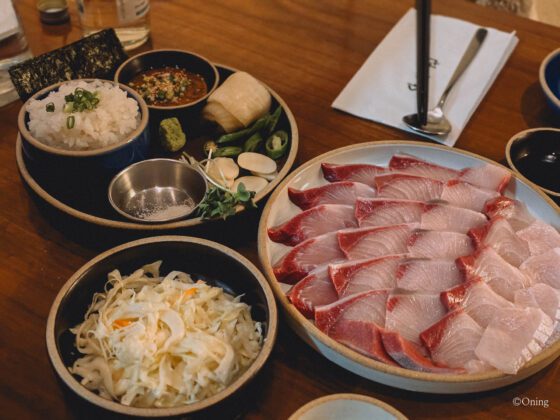
So I thought I’d write a series of honest, personal recommendations, ranking Korean dishes by how challenging they might feel for a first-timer—from more adventurous dishes like bangeo-hoe, a raw winter yellowtail sashimi, all the way down to the easy, universally loved ones.
For the difficulty scale, I landed on a benchmark that turns out to be surprisingly reliable: whether young Korean kids will eat it. Most Korean children are picky too—wary of unfamiliar textures, put off by anything spicy—so if the kids are on board, it’s usually a safe bet.
The Easiest Place to Start: Jajangmyeon
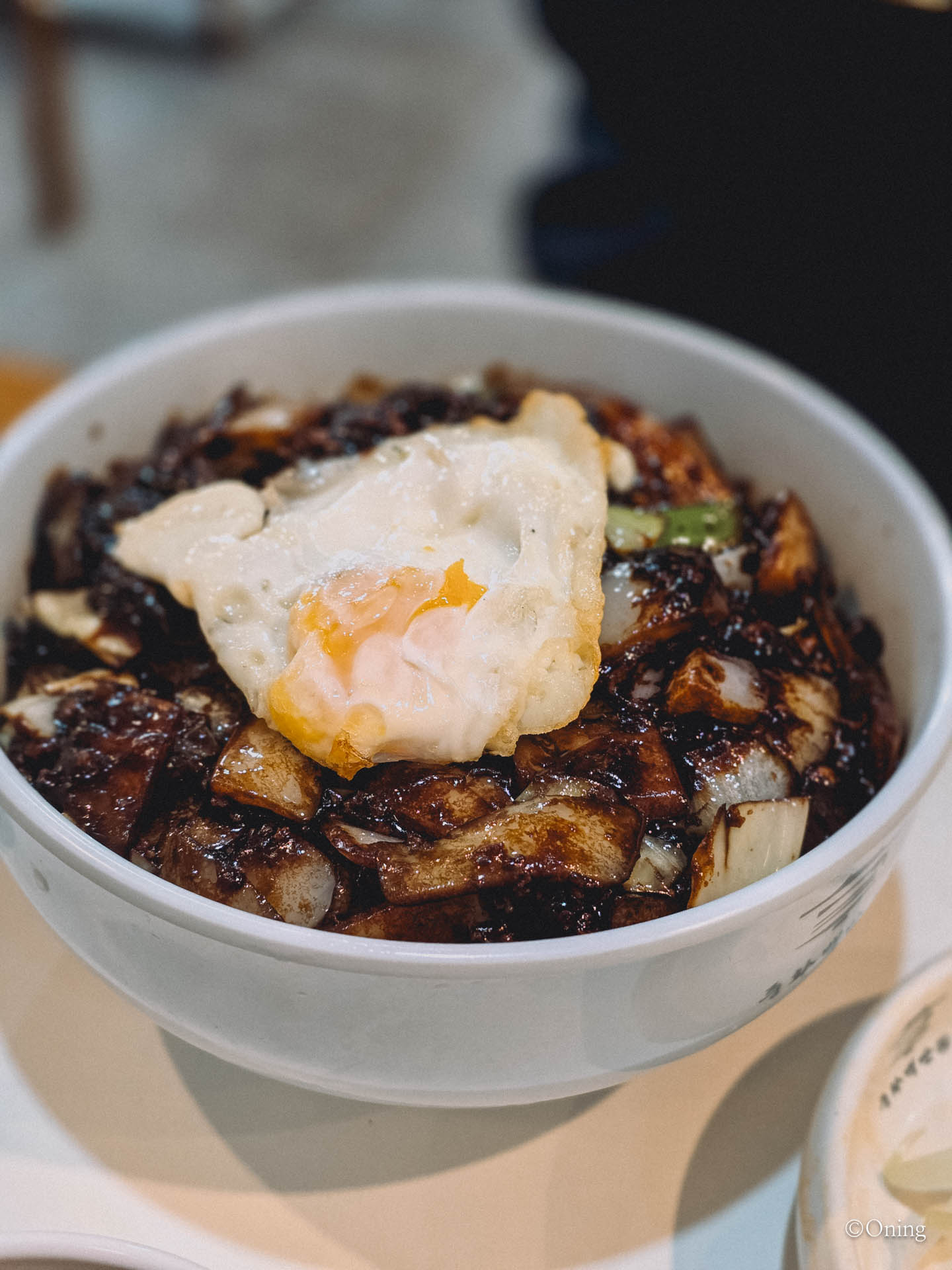
And today’s dish sits at the very bottom of the difficulty scale: jajangmyeon (짜장면), the star of Korean-Chinese cuisine.
Korean Chinese food dates back to the early 1900s, and over more than a century it’s been localized so thoroughly that it has really become a Korean cuisine of its own. China has its own version of jajangmyeon, but it’s a completely different dish from what you’ll find in Korea—think of it the way Japanese ramen traces back to China but became something entirely its own.

Korean kids start eating jajangmyeon as early as two or three, and I can honestly say I’ve never met a child who dislikes it (my own son excepted). It’s about as universally crowd-pleasing and inoffensive as food gets. As for what it actually tastes like… that’s genuinely hard to put into words. It tastes like jajangmyeon.
When I was little—about 30 years ago—it was easy enough to come by, but still wasn’t an everyday food. It was the meal my grandparents would treat me to on special occasions, like starting or finishing a school year.
It was also the classic moving-day meal. These days you can get almost anything delivered in Korea, but back then it was one of the few dishes that would come to your door—so on a hectic moving day, lunch was always, without fail, jajangmyeon. It’s a real comfort-memory dish for me.
Lately the trend has shifted again: jajangmyeon has gone upmarket, made with fancier ingredients and priced to match. Sometimes I look at the price and think, *really?* The range is enormous. A long-running old-school place might still charge 7,000 won, while a more upscale or newly opened spot will run 12,000. The priciest I’ve ever seen was at a place called Mutan in COEX, going for 55,000 won—apparently it comes with steak and truffle. Personally, unless you’re a serious foodie, I think around 10,000 won is plenty.
Types of Jajangmyeon, and Its Great Rival: Jjamppong
So is jajangmyeon the only thing worth ordering at a Chinese restaurant? Not at all. As the name “Chinese cuisine” suggests, most places serve a huge variety of dishes—it just happens to be the most famous.
For years I only ever ordered plain jajangmyeon, but once I grew up and realized how many varieties there are, I worked my way through them and went through a serious stir-fried-jajang phase. Here’s the basic idea: regular jajangmyeon is noodles topped with a sauce of onion and vegetables stir-fried in black bean paste, then mixed together. The stir-fried kind (bokkeum-jjajang) is tossed with the noodles as it cooks, so the seasoning soaks in better and, to me, tastes even better. The catch is that many places only make it in portions for two or more, so these days I default to gan-jjajang.


The difference there comes down to whether water is added while cooking the sauce—I find gan-jjajang richer, so it’s my pick. My husband goes the other way: he prefers the soft onions of regular jjajang over the fresh, crisp bite of gan-jjajang, and if there’s a minced-meat version (uni-jjajang) on the menu, that’s his choice. Beyond those, there’s a seafood version with squid and shrimp, a spicy Sichuan-style one, a chili version, and more—so it’s worth picking one to suit your taste.
And then there’s the dish that stands shoulder to shoulder with jajangmyeon at every Chinese restaurant: jjamppong(짬뽕). Some people are jajangmyeon loyalists through and through, but a surprising number of us agonize over the same question before every order—jajangmyeon or jjamppong? I’m firmly in that camp.
When I’m eating jajangmyeon I start craving jjamppong, and when I’m eating jjamppong I’m convinced the black bean noodles would’ve been the better call… the same dilemma, every single time, ha. So many Koreans feel this way that there’s even a half-and-half order of both. Personally, though, splitting it in two somehow mutes the flavor of each, so I don’t recommend it.


These days I do order jjamppong instead fairly often. It’s a spicy noodle soup built around seafood—squid, mussels, shrimp and the like—but I lean heavily toward the beef versions, especially the one made with thin-sliced brisket. If you love a spicy noodle dish, I’d recommend jjamppong too—just know it isn’t quite as beginner-friendly as jajangmyeon.
*Tip:* At most places you can ask to swap the noodles for rice—jajangmyeon becomes jajang-bap, jjamppong becomes jjamppong-bap: noodles out, served over rice instead. It has its own devoted fans. And if you’re a big eater, you can usually pay a little extra for a larger portion of noodles (gopbaegi); my husband, who eats a lot, checks that box every time.
The Signature Sharing Dish: Tangsuyuk
When I go to a Chinese restaurant alone for lunch, I’ll usually just get a single dish and head out. But when a group gets together, the meal feels incomplete without tangsuyuk. Tangsuyuk(탕수육) is deep-fried pork served with a sweet-and-sour sauce. Occasionally we’ll order something else, like kkanpunggi, but nine times out of ten it’s tangsuyuk.


The usual group move is for everyone to pick their own noodle dish and then order a meat dish like tangsuyuk to share. Quality does vary—some places serve it long after frying, or with the meat cut too thin—so if you want to try it, I’d choose a restaurant that reviews specifically praise for its tangsuyuk.
Being such a signature dish, tangsuyuk even splits food-loving Koreans into two camps: the dippers and the pourers. The dippers say you should dip each piece so the batter stays crisp; the pourers argue that dipping is only necessary at places that can’t fry well, and that a restaurant confident in its tangsuyuk serves the sauce already poured on, because the batter won’t go soggy. Honestly, I don’t think it matters either way—but some Koreans really dislike having the sauce poured over everything, so if you’re sharing tangsuyuk with a Korean, it might be worth asking first.
Where to Eat
There are plenty of well-regarded Chinese restaurants, but I don’t think there’s any one place you absolutely have to go—a decently rated Chinese spot near you on Google Maps should do the job just fine. That said, if you’d rather seek out somewhere a little nicer, I’d suggest the Chai797 franchise, which takes a more upscale approach to Korean-Chinese food.

The jajangmyeon, jjamppong, and tangsuyuk in this post are from a restaurant called Junghwa Baekban (중화백반) in Gyodae, a district packed with offices. A Chinese restaurant that thrives in a busy business area is usually a safe bet—and sure enough, I had a genuinely delicious meal.
Then the country grew fast, and at some point jajangmyeon stopped being special. By the time I entered the workforce, Chinese food was a go-to for both team lunches and late-night overtime meals. The menu is varied enough that everyone can order what they want, the prices are reasonable, it’s cooked fast, and they deliver right to the office—pretty much ideal for busy office workers.
If you’re a foreigner who wants to try a wide range of Korean food—or someone who’s found that Korean food isn’t quite to your taste and is looking for something a little different—I really recommend giving Korean-style jajangmyeon and tangsuyuk a try at least once!
Seafood Restaurant List
- Junghwa Baekban (Seocho-gu)
- Chai797 (Jung-gu, Jongno-gu, Seodaemun-gu, Yeongdeungpo-gu, Seocho-gu, Gangnam-gu, Gwangjin-gu..)
- JU (Seocho-gu)