🇰🇷 Korea
20260120
Winter Yellowtail Hoe in Korea
Some food in Korea is deeply connected to the seasons. Korea has four distinct seasons, and each brings its own set of seasonal ingredients. While modern technology and imports make most ingredients available year-round, Koreans still love eating what’s in season. There are even “seasonal food calendars” now — mostly featuring vegetables, fruits, and seafood.
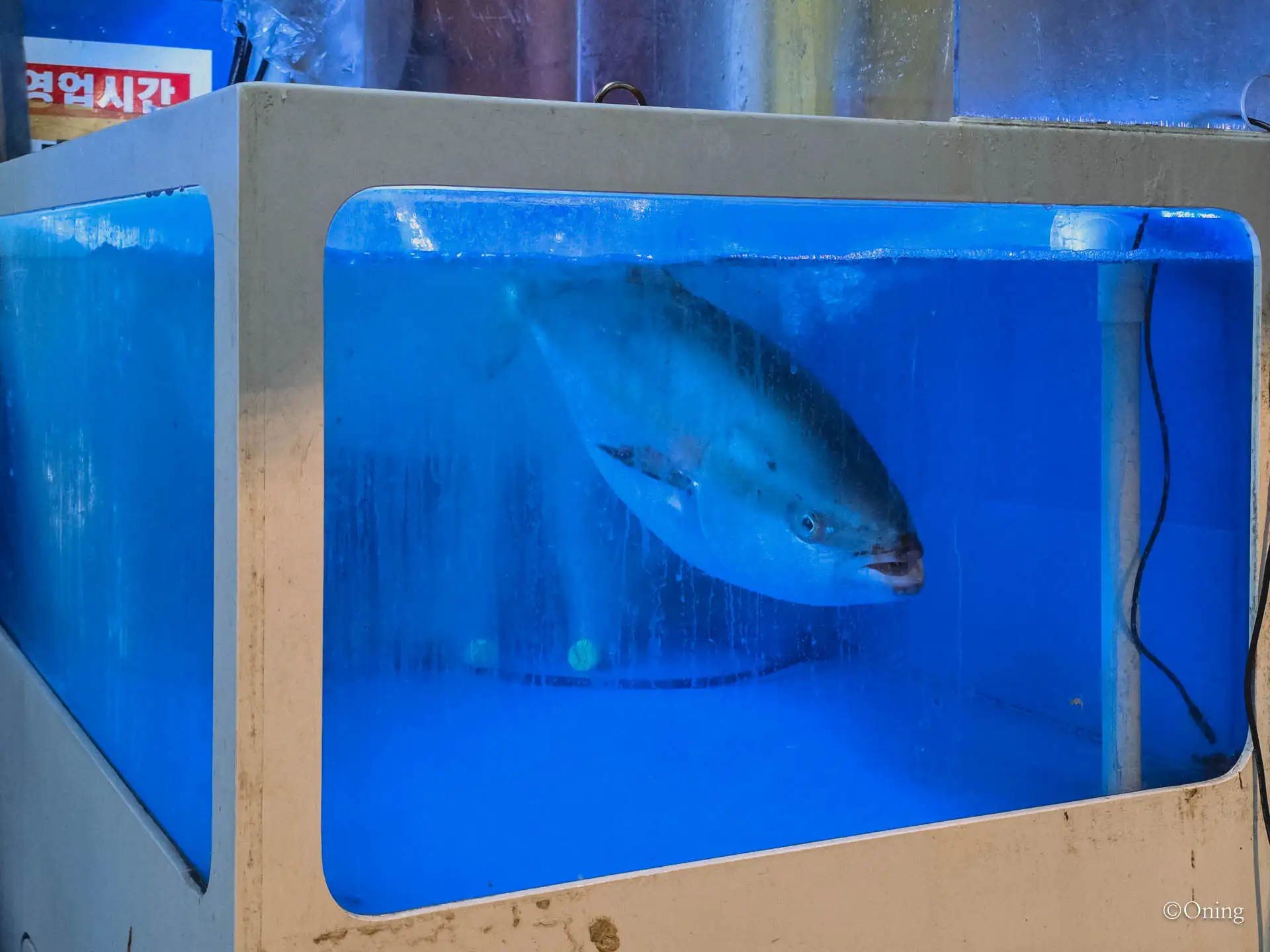
Today, I want to introduce a dish that skyrockets in popularity every winter: bangeo-hoe(방어회, yellowtail Sashimi). Not everyone loves raw fish, of course, but personally, when winter rolls around and I’m making plans with friends, it’s almost automatic: “We should get some bangeo-hoe!” Around this time of year, restaurants famous for their yellowtail always have lines out the door, even on weekdays.
A quick note on terminology: “Hoe” (회, pronounced “hweh”) refers to thinly sliced raw meat or fish in Korea — essentially the same concept as Japanese sashimi. You’ll see it in dishes like saengseon-hoe (raw fish) and yukhoe (raw beef).
Why Winter Bangeo-Hoe Is So Popular
Peak Fat Content
Yellowtail accumulates fat as water temperatures drop between November and February. This gives winter yellowtail a rich, savory depth that rivals mackerel or tuna.
Different Cuts, Different Experiences
The belly, mid-section, and back each have distinct flavors and textures. The belly of a large winter yellowtail is famous for its melt-in-your-mouth quality.
Dramatic Seasonal Difference
Spring and summer yellowtail tastes mild and unremarkable, but winter yellowtail sees a dramatic upgrade in density and flavor. There’s a saying: “You can’t beat winter bangeo-hoe.”
Bigger Is Better
Yellowtail develops more fat as it grows larger. In winter, fish over 6kg are commonly caught, making the hoe exceptional.
Cultural Event Status
Every winter, social media, and food blogs spotlight “bangeo-hoe season,” creating a natural trend. “Gotta have bangeo-hoe in winter” has become part of Korea’s seasonal food culture.
Versatile Preparation
Beyond hoe, yellowtail shines as sushi, grilled, or in hot pot. Torched yellowtail sushi is a particular winter favorite.
The sweet spot is roughly November through February, but I personally recommend December to January — when it’s cold enough to make you say, “Wow, it’s really freezing out there.”
Where to Eat: Local Hoe Restaurants (횟집)
The most accessible option is your neighborhood hoe restaurant (hoejip). You can find one in almost any area, and if the place does decent business, they’ll likely carry yellowtail in winter. For after-work meetups, convenience matters, so I usually pick a busy spot near the meeting place or my home.
Pro tip: Go where there’s a crowd. Beyond the skill in aging and slicing fish, yellowtail is a large fish that tastes better when it’s big. Busy restaurants go through inventory quickly, meaning fresher, larger fish. Quiet places might serve yellowtail that’s been sitting in the fridge too long.
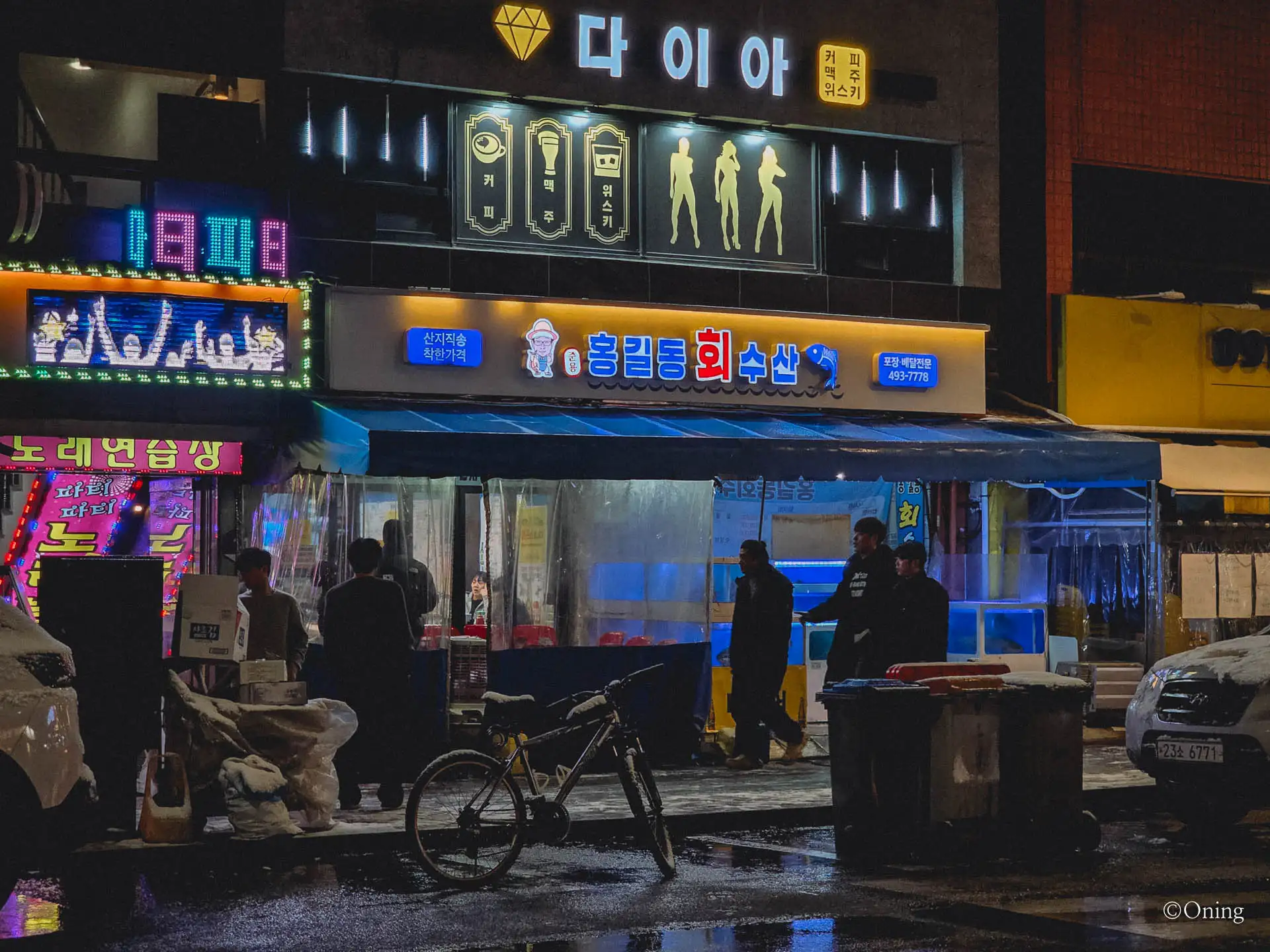
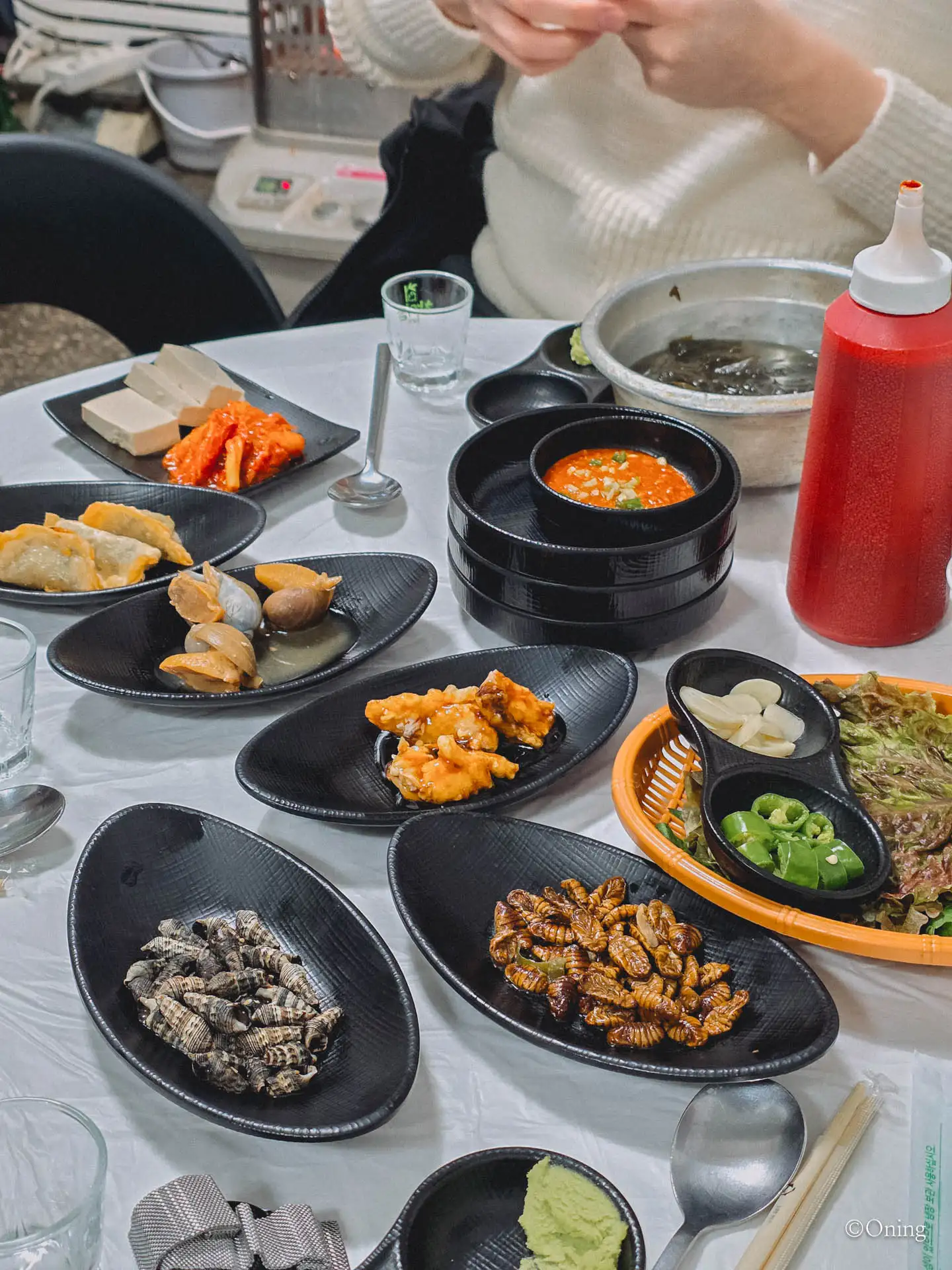
Recently, I met friends near their place at a restaurant famous for bangeo-hoe. Even on a weekday evening, we had to wait. The place had a 150-minute time limit due to demand — staff would give you a heads-up as time ran out.
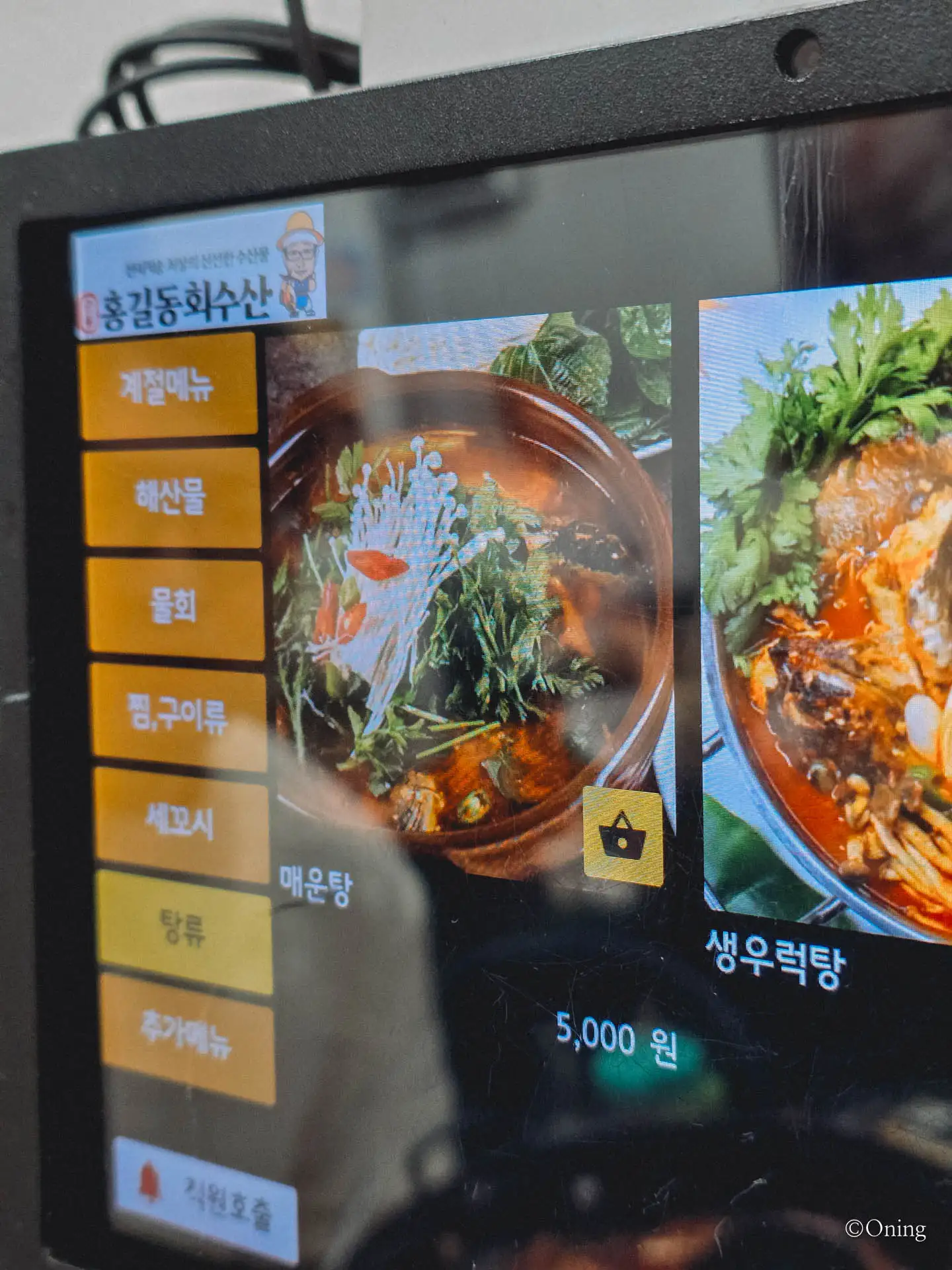
We ordered via tablet at our table. Three of us, medium size — easy choice.
Like most hoe restaurants, various side dishes arrived first. This place, Honggildong Hoesusean, was pretty standard. Some places overwhelm you with banchan, but I’ve noticed those sometimes skimp on the actual fish. So I don’t automatically celebrate a mountain of side dishes.
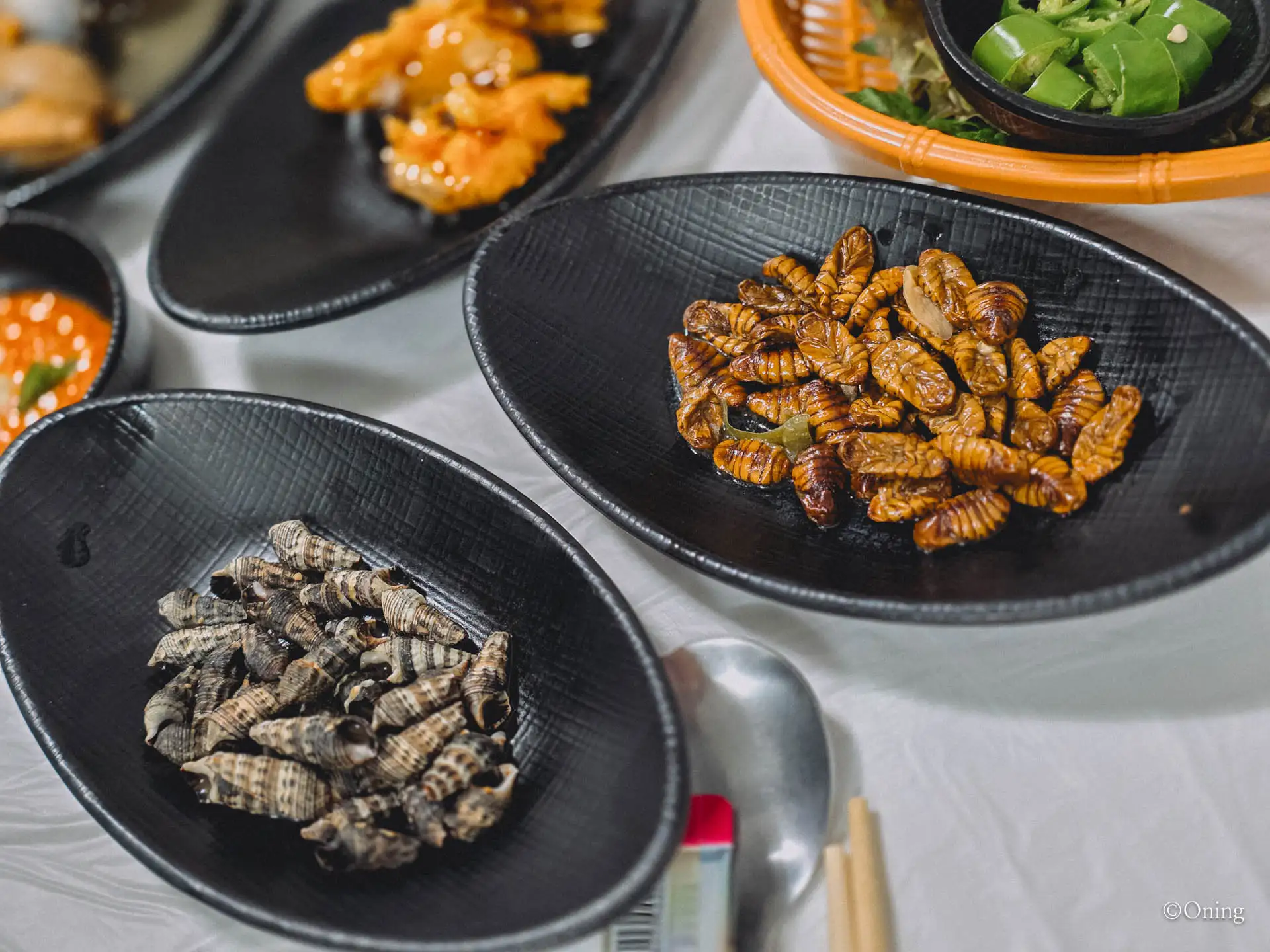
Among the banchan, I spotted beondegi (silkworm pupae) and dasulgi (freshwater snails) for the first time in ages. These were common street snacks when I was a kid — maybe 100 or 200 won for a paper cup. I don’t eat them anymore, not because of taste but… let’s just say once you know what they are, the visual is harder to ignore. Many Koreans can’t eat beondegi either. One friend at our table, though, got nostalgic and happily finished the entire portion alone.
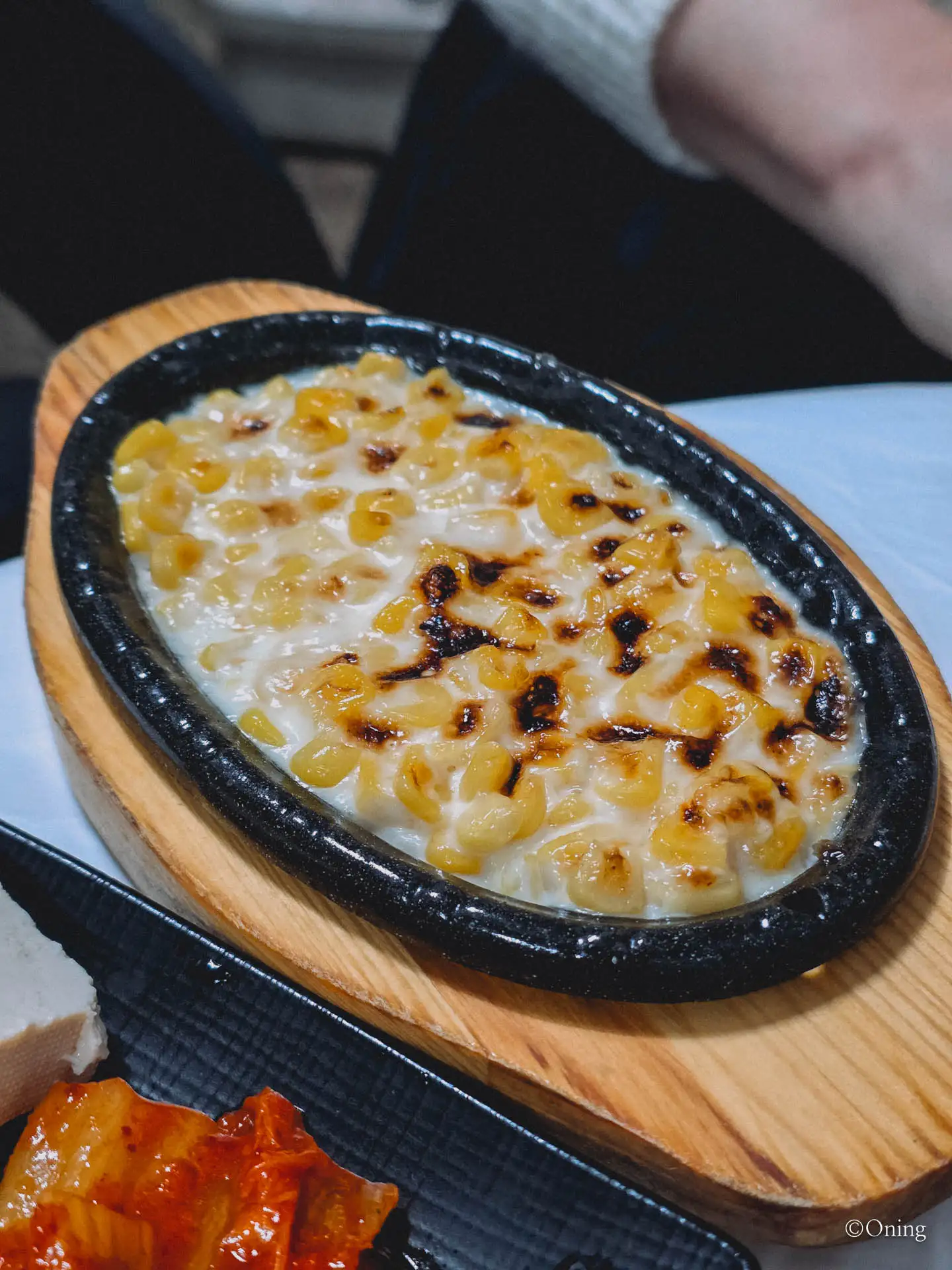
Then came corn cheese — that reliable banchan that never disappoints. Canned corn with mayo and a bit of cheese, baked until bubbly. Simple, impossible to dislike, and my childhood favorite at hoe restaurants.
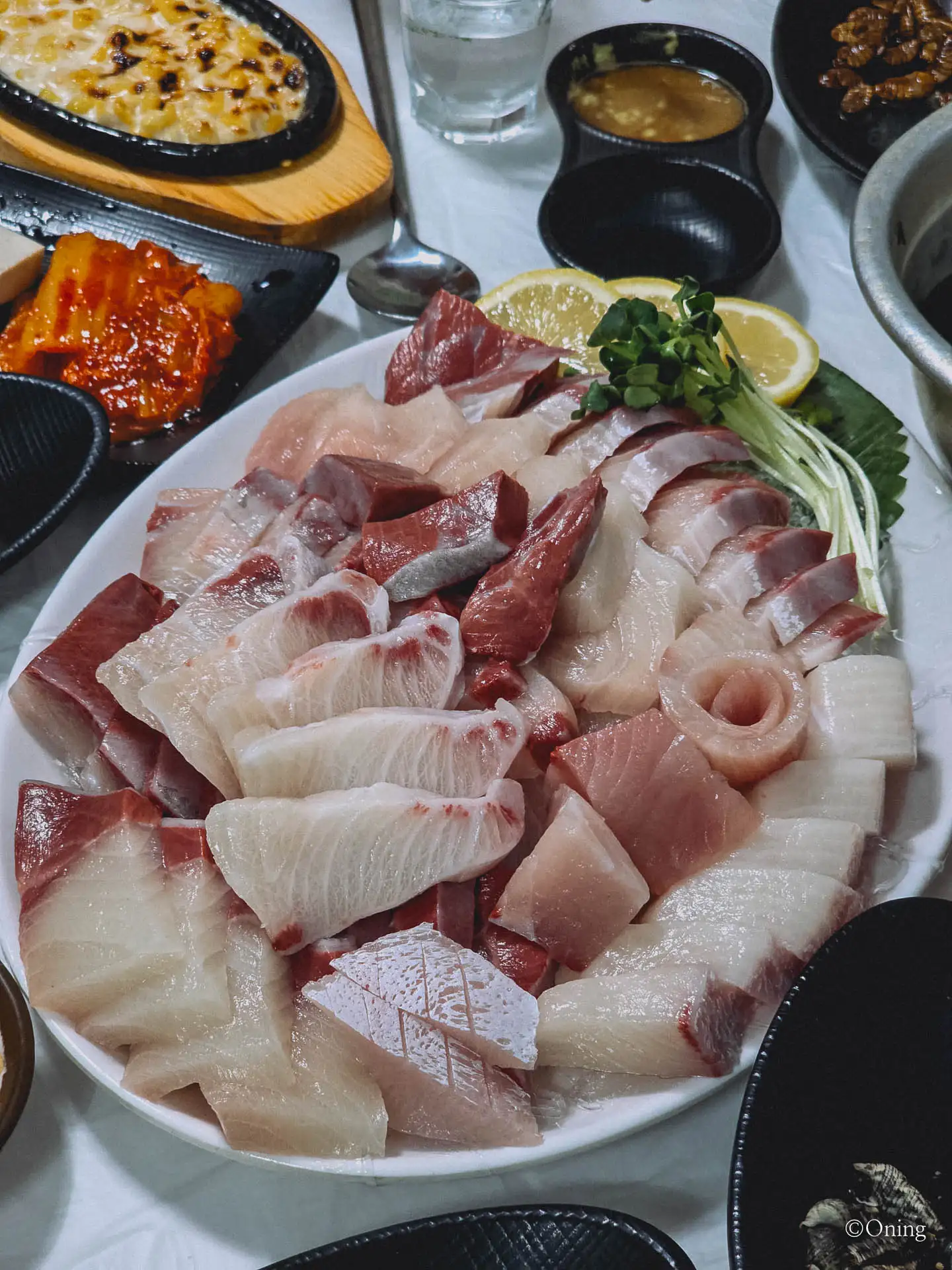
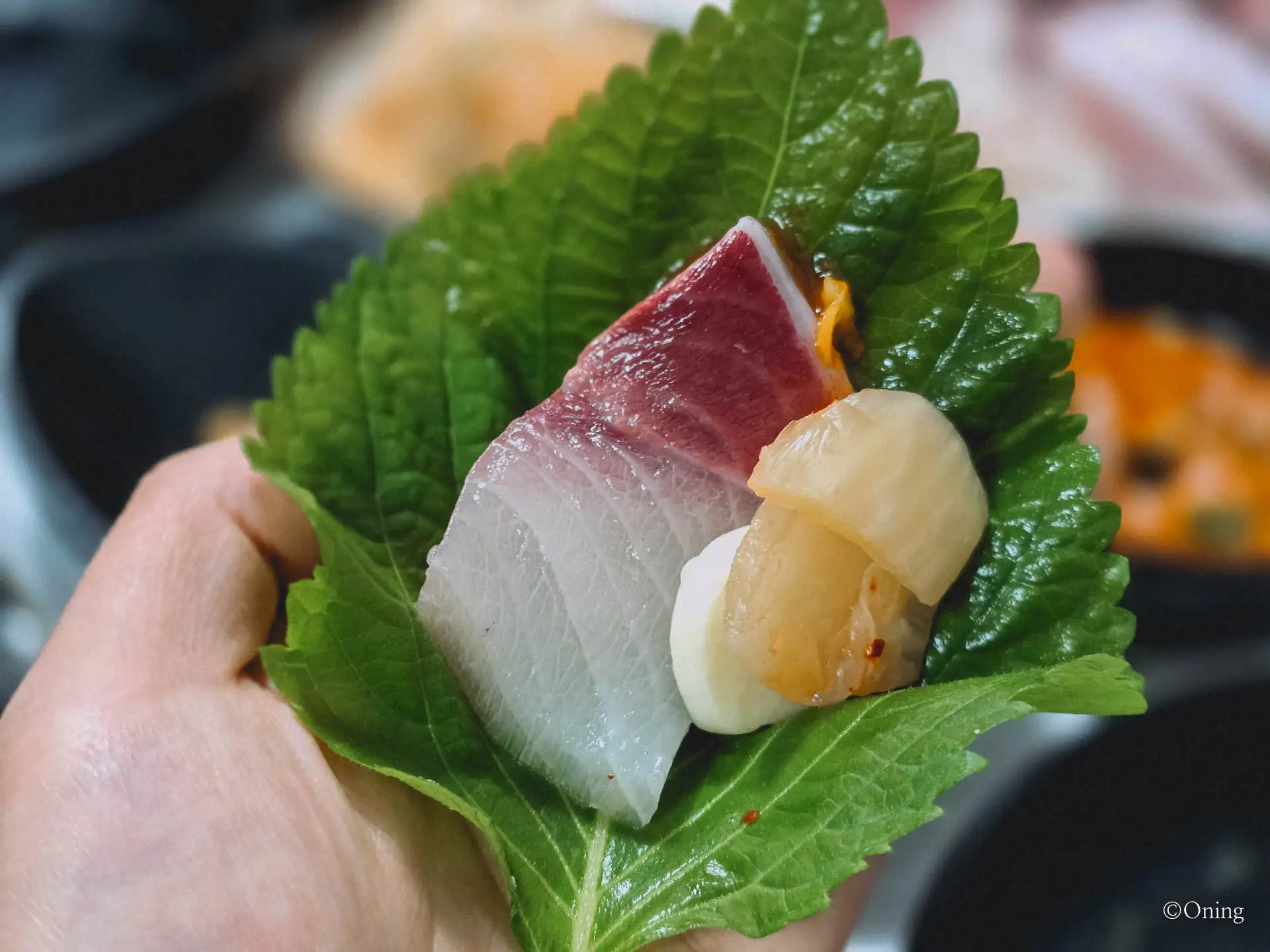
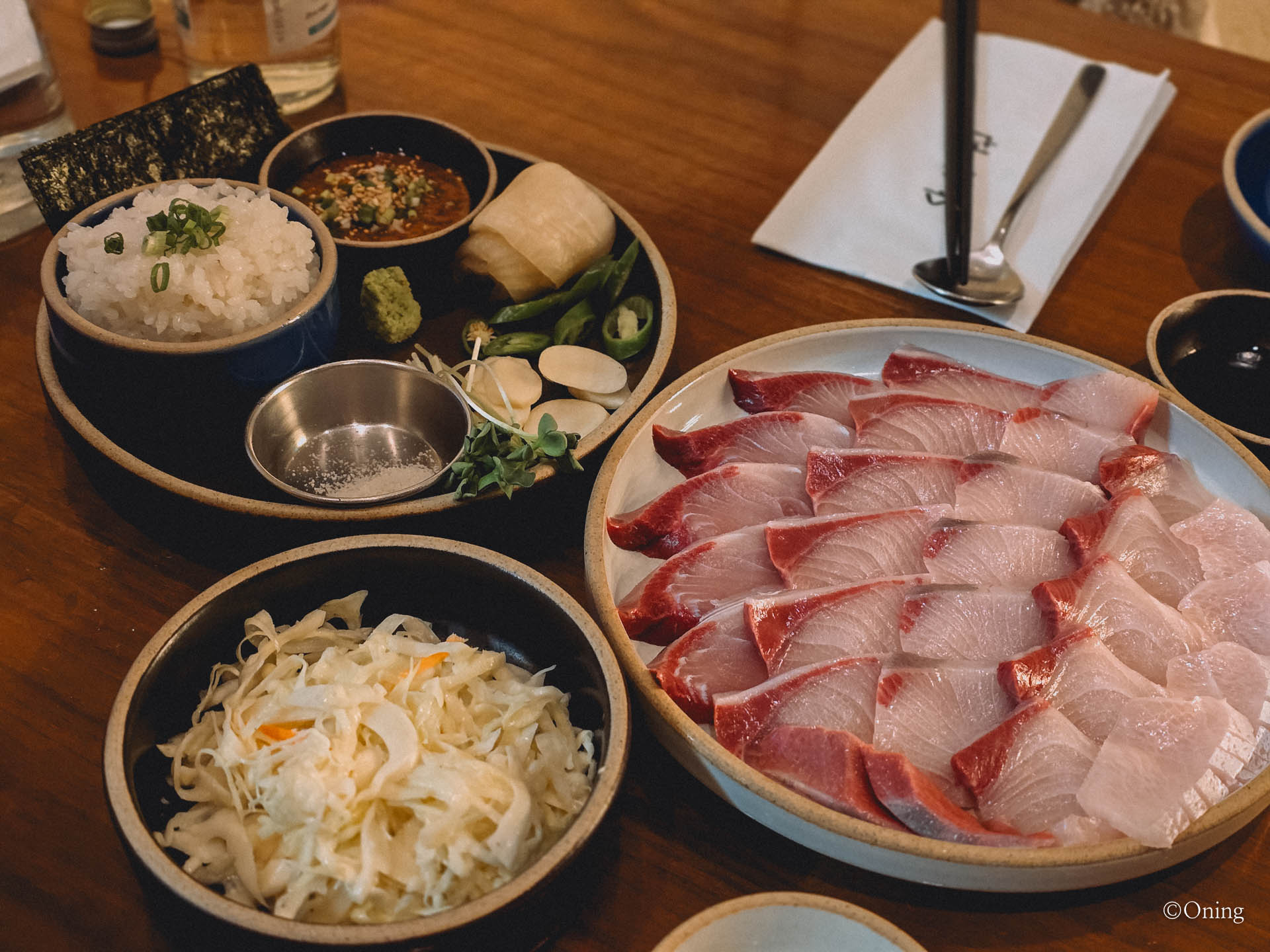
After some chatting, the bangeo-hoe arrived. Medium size for three people, 75,000 won. The presentation was stunning. Large yellowtail means you get a variety of cuts, and this platter delivered — you could see how richly marbled the fish was just by looking.
There’s no single “correct” way to eat bangeo-hoe. Some wrap it in seaweed like tuna, and dipping sauces range from wasabi-soy to ssamjang (fermented bean paste) to chogochujang (sweet-spicy vinegar sauce). I personally love wrapping it in perilla leaves with ssamjang. Perilla has a strong, distinctive aroma that some people find off-putting, but it pairs beautifully with fatty fish. One piece of fresh yellowtail on a perilla leaf, a dab of ssamjang, a slice of raw garlic, a bit of rinsed kimchi — pure happiness. Add a shot of soju to cut through the richness, and you’ve got the perfect bite.
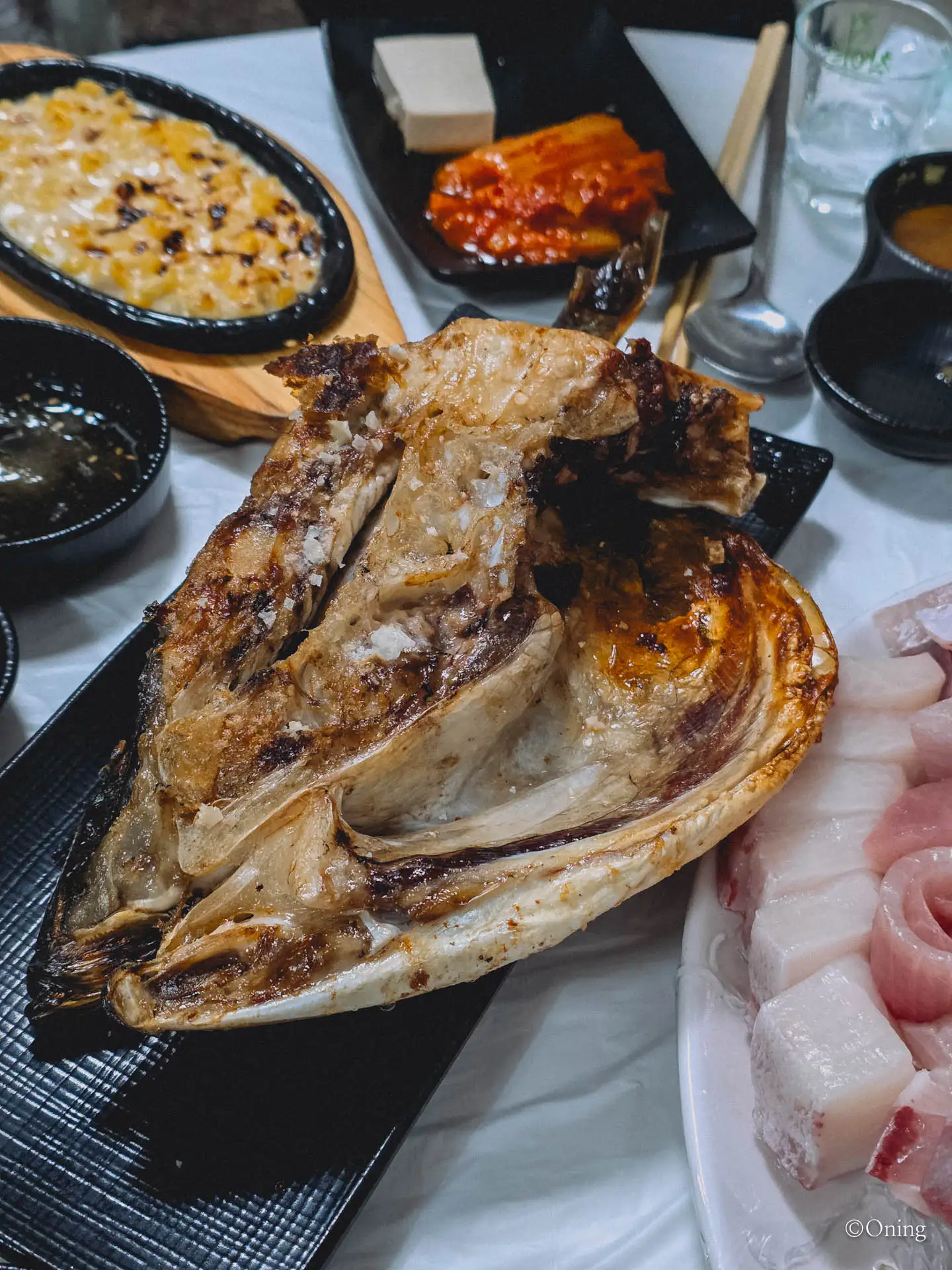
As we kept eating, sweet potato tempura and grilled fish arrived. The sweet potato was delightful, and we lucked out — instead of the usual grilled herring, we got yellowtail head. Tender, flavorful, excellent.
After a bottle or two of soju and plenty of life updates, we ordered maeuntang (spicy fish stew) to finish. Usually around 5,000 won at hoe restaurants, it’s made from the fish bones, radish, crown daisy, and spicy seasoning. The kick is perfect after all that rich hoe. Adding ramyeon noodles is also highly recommended.
Two and a half hours flew by. With people still waiting, our time was up, so we settled the bill and left.
If someone asked me what to eat in Korea, I’d enthusiastically recommend a hoe restaurant — especially bangeo-hoe in winter. But first, I’d ask: “Do you actually eat raw fish?”
If you’ve never had hoe, or if you’re not comfortable with that springy-chewy-soft texture, I’d hesitate to recommend it. Hoe restaurants are essentially all-fish establishments, so there’s not much else to fall back on if it’s not your thing.
Yellowtail Hoe Restaurant List
- Honggildong Hoesusean (Jungnang-gu)
- Namhae Bada Macha (Seongbuk-gu )
- Uri Bada Susan (Mapo-gu)
- Daechan Hoetjip (Jongno-gu)
- Daegwangeo Hoejip (Gangbuk-gu)
- Uri Hoe Pocha (Dongjak-gu)
- Baegildo (Gwangjin-gu)
- Jamae Susan (Gangnam-gu)
Where to Eat: Noryangjin Fish Market / Garak Market
For the biggest seafood markets in Seoul, there’s Noryangjin and Garak. Both are massive, offering an incredible variety of seafood. If it swims, they probably have it — fresh and alive. Koreans love visiting these places too.
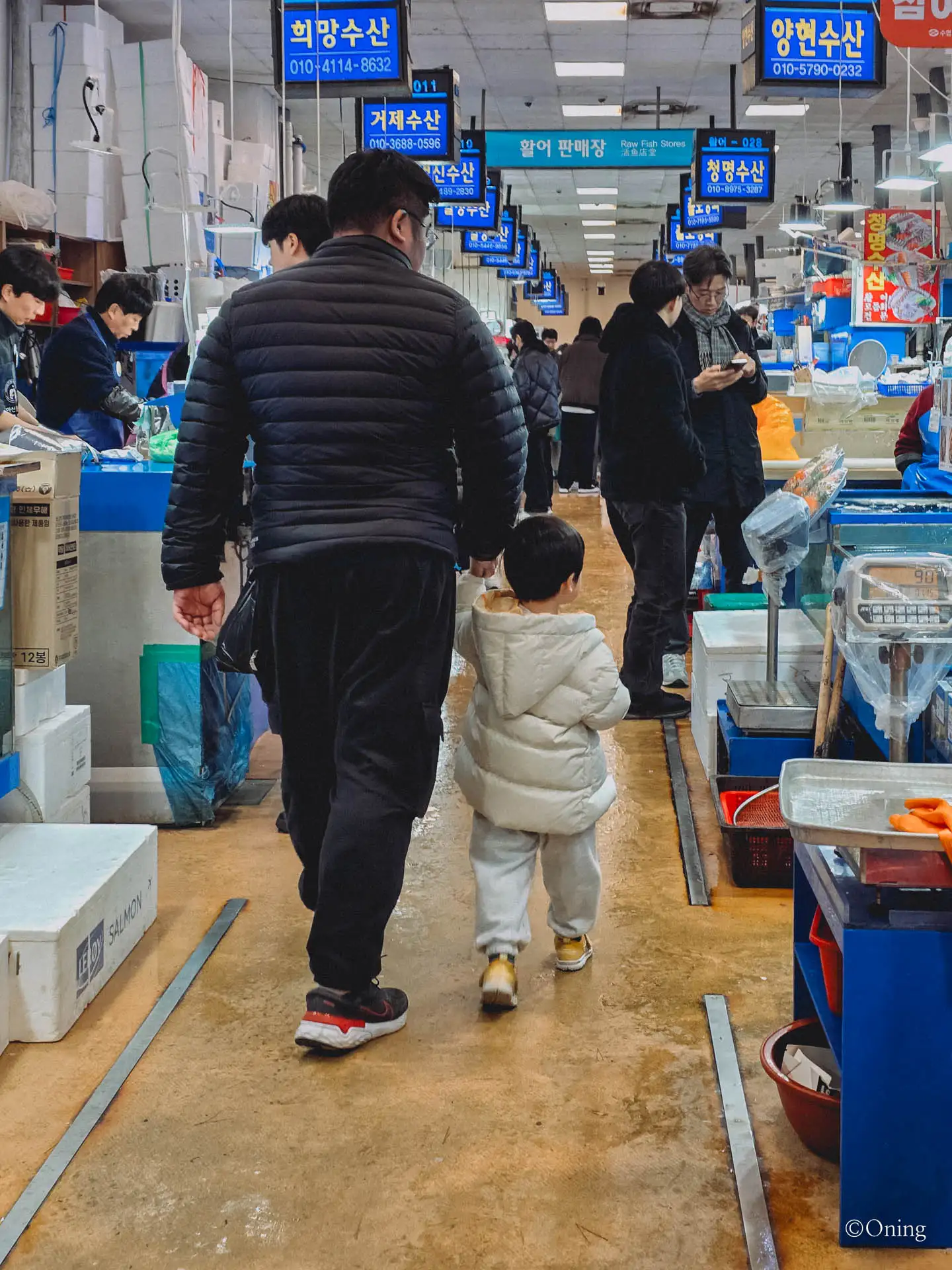
Things have improved over the years, but being traditional markets, some light soliciting still exists. There’s also lingering skepticism about price manipulation — stories of vendors weighing fish with water in the bag or pressing on the scale. Because of this, I personally prefer places with fixed prices.
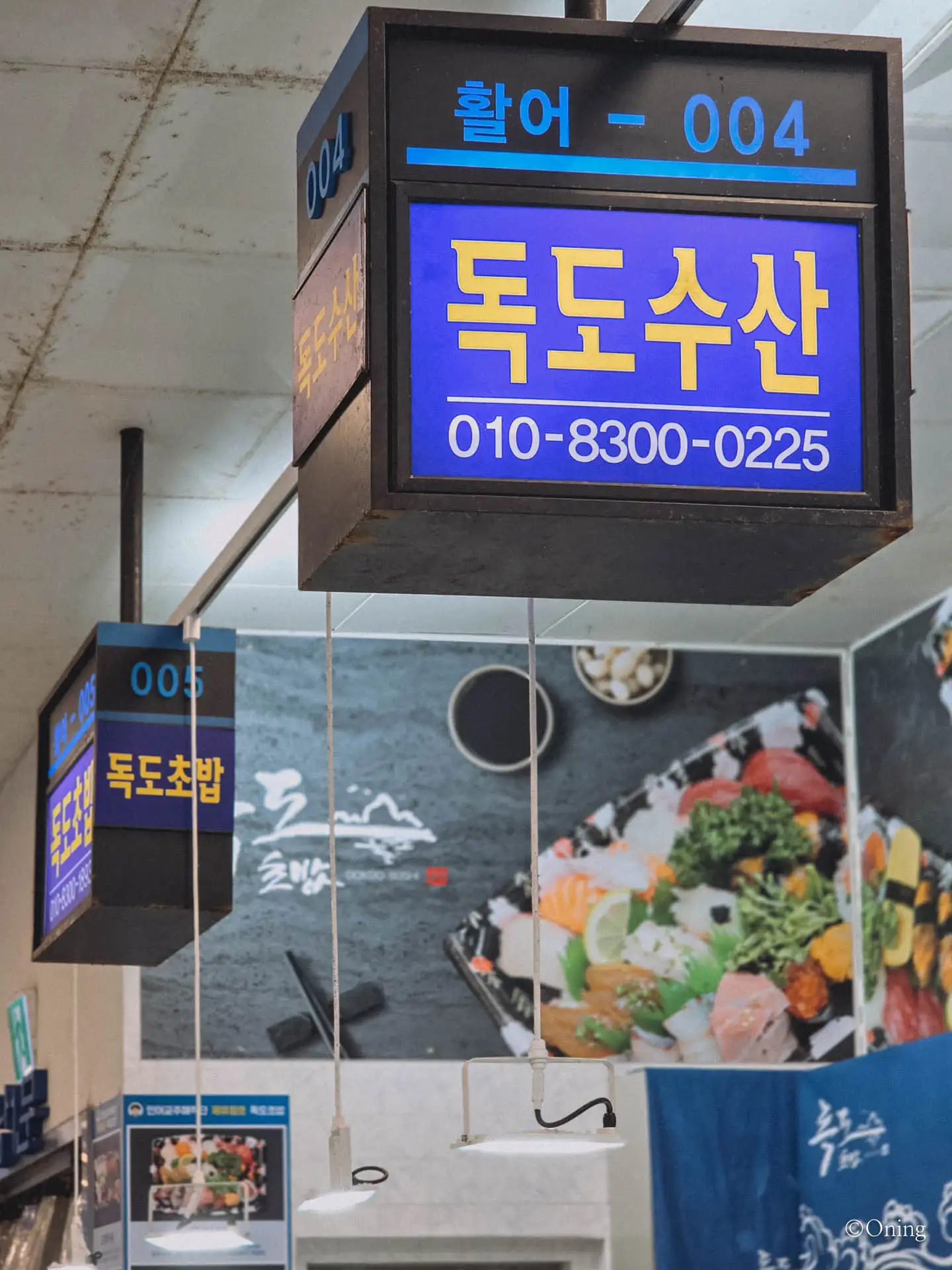
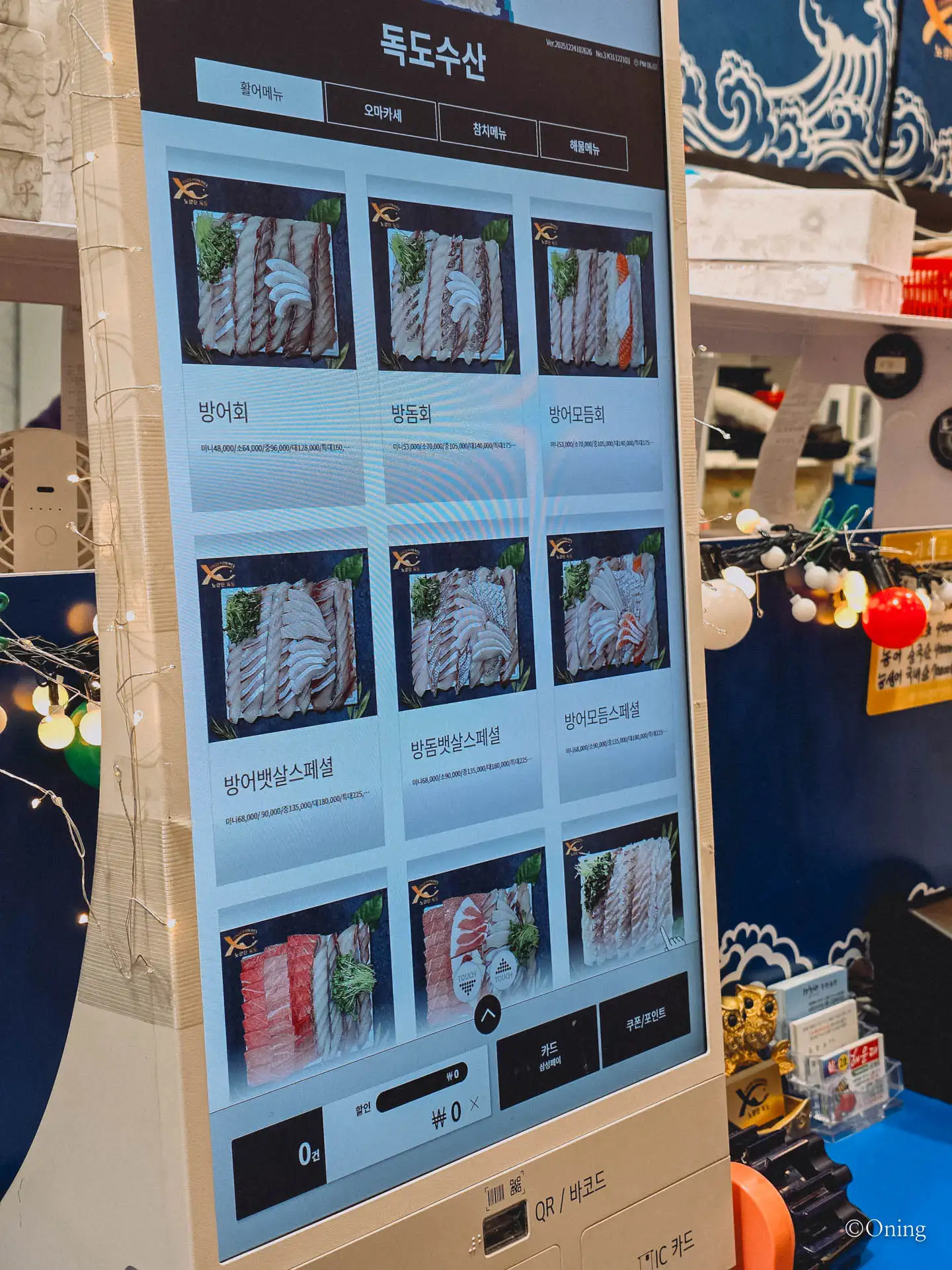
Currently, the most famous vendor at Noryangjin is Hyungje Sanghoe, but I usually go to Dokdo Susan (stalls 002-004). You can order online for pickup with no waiting, or use the kiosk on-site with staff assistance.
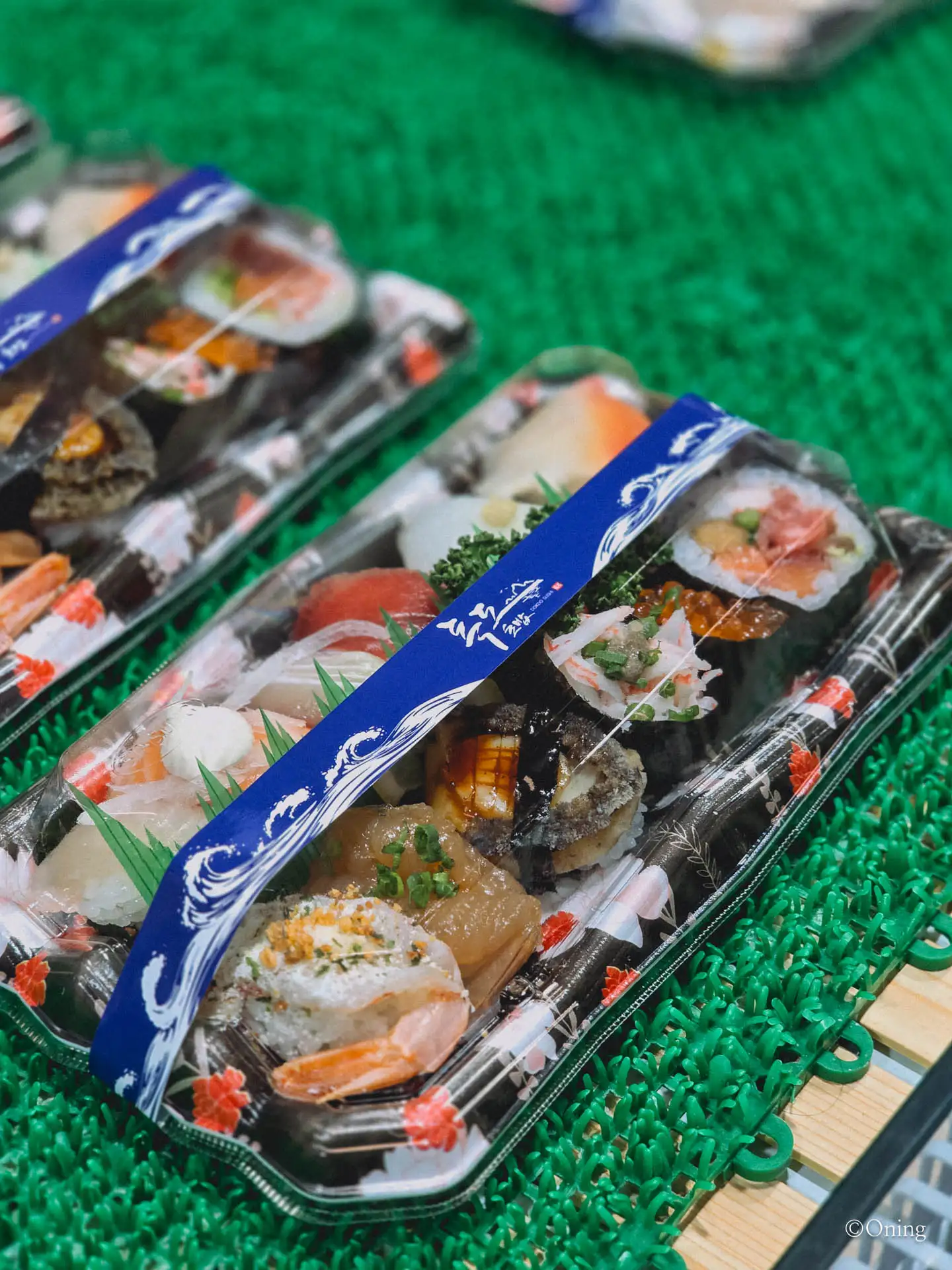
On my recent visit to pick up yellowtail, I noticed Dokdo Chobap next door selling pre-made sushi lunch boxes — 12 assorted pieces for around 22,000 won. Seemed like solid value, though I didn’t try it since I had other plans. Even just looking at it, the quality appeared quite good.
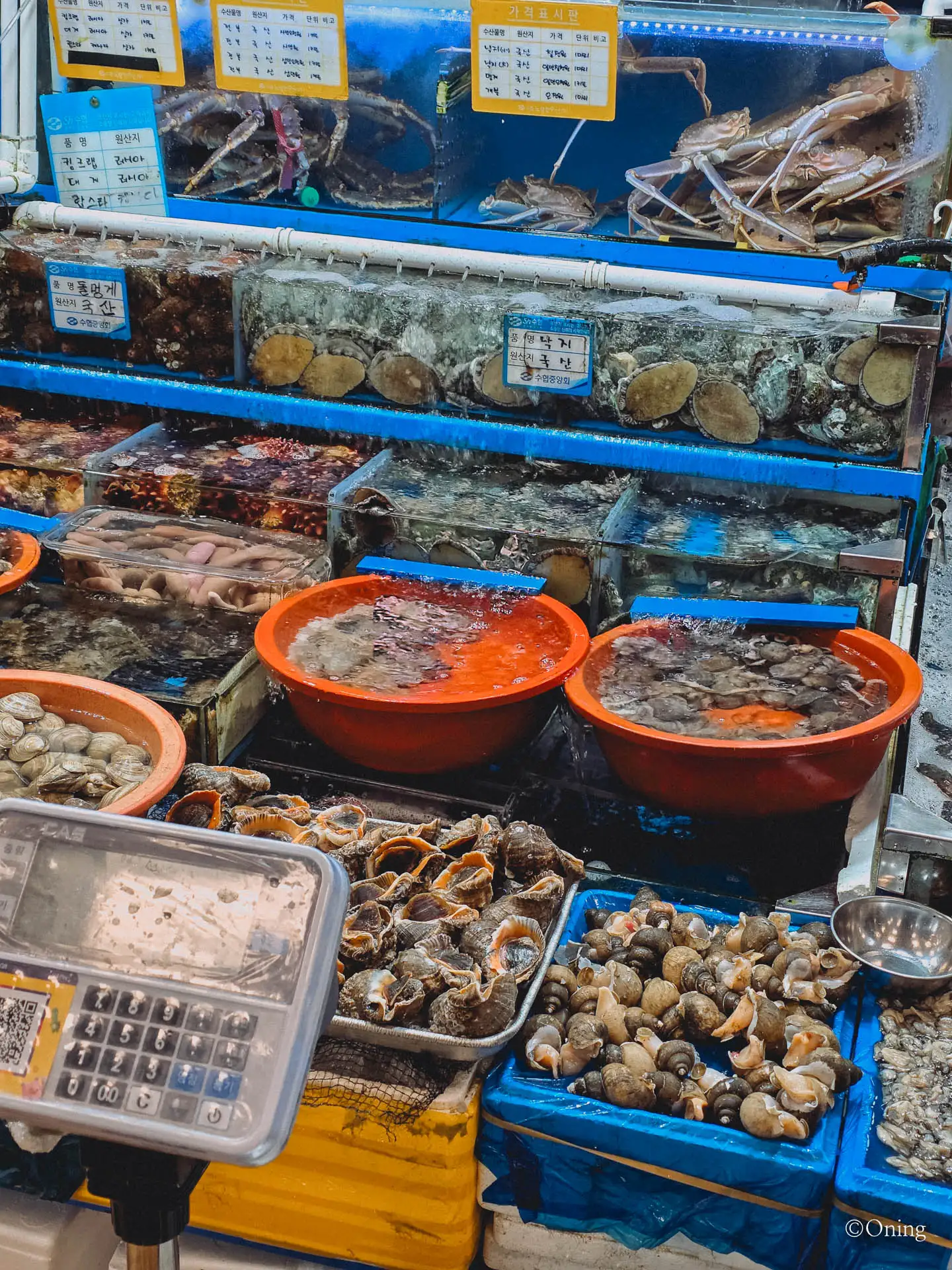
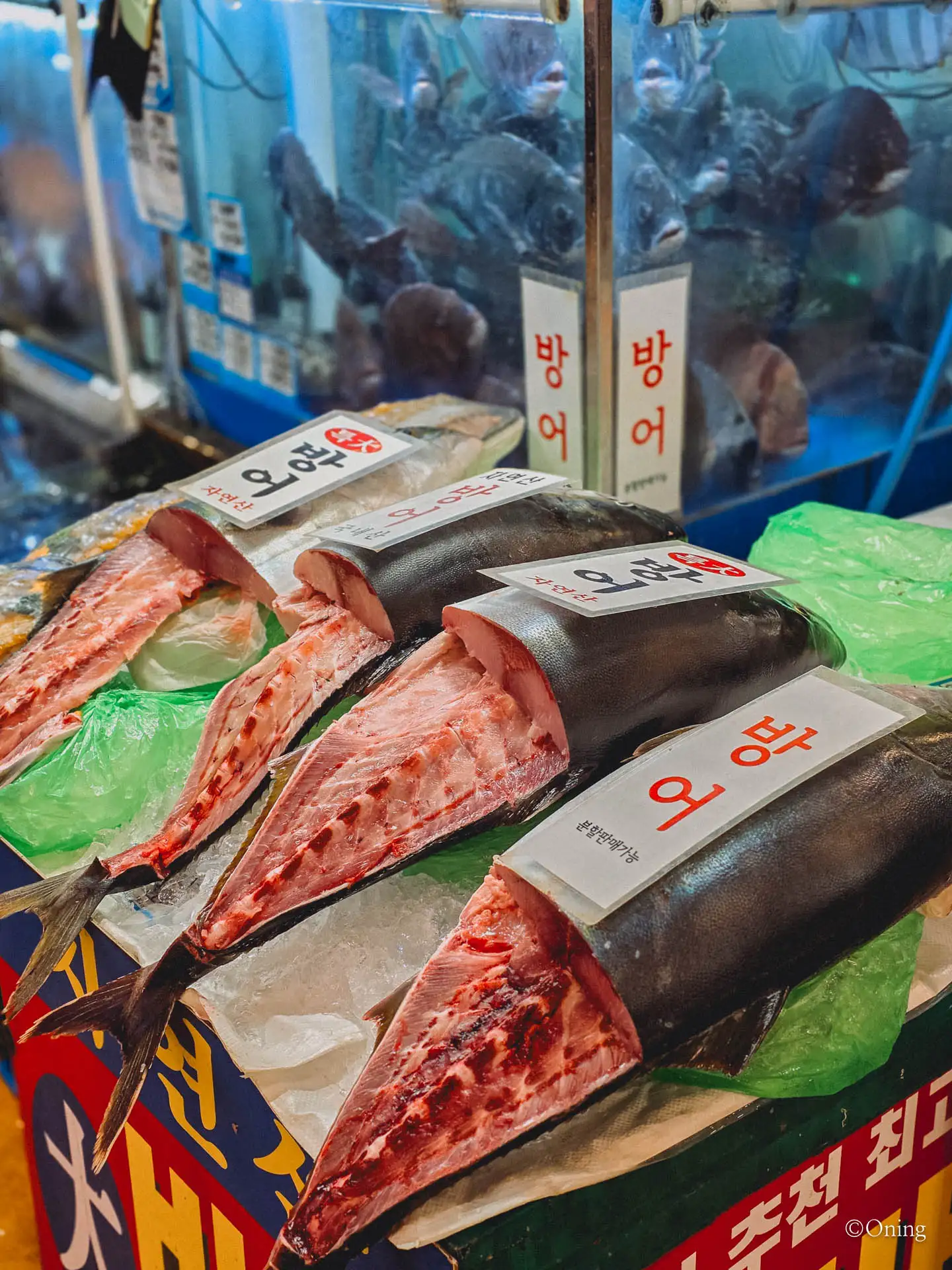
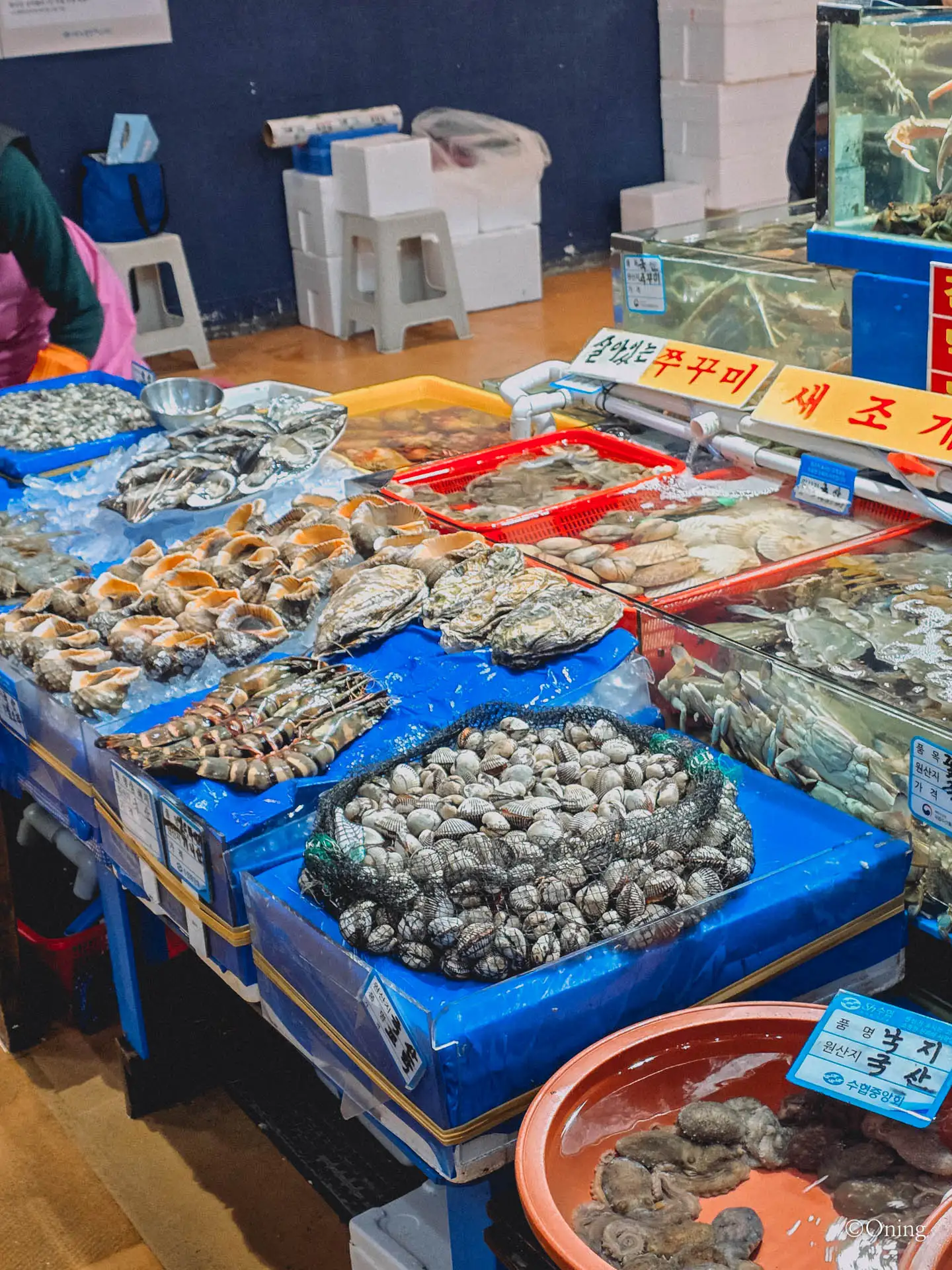
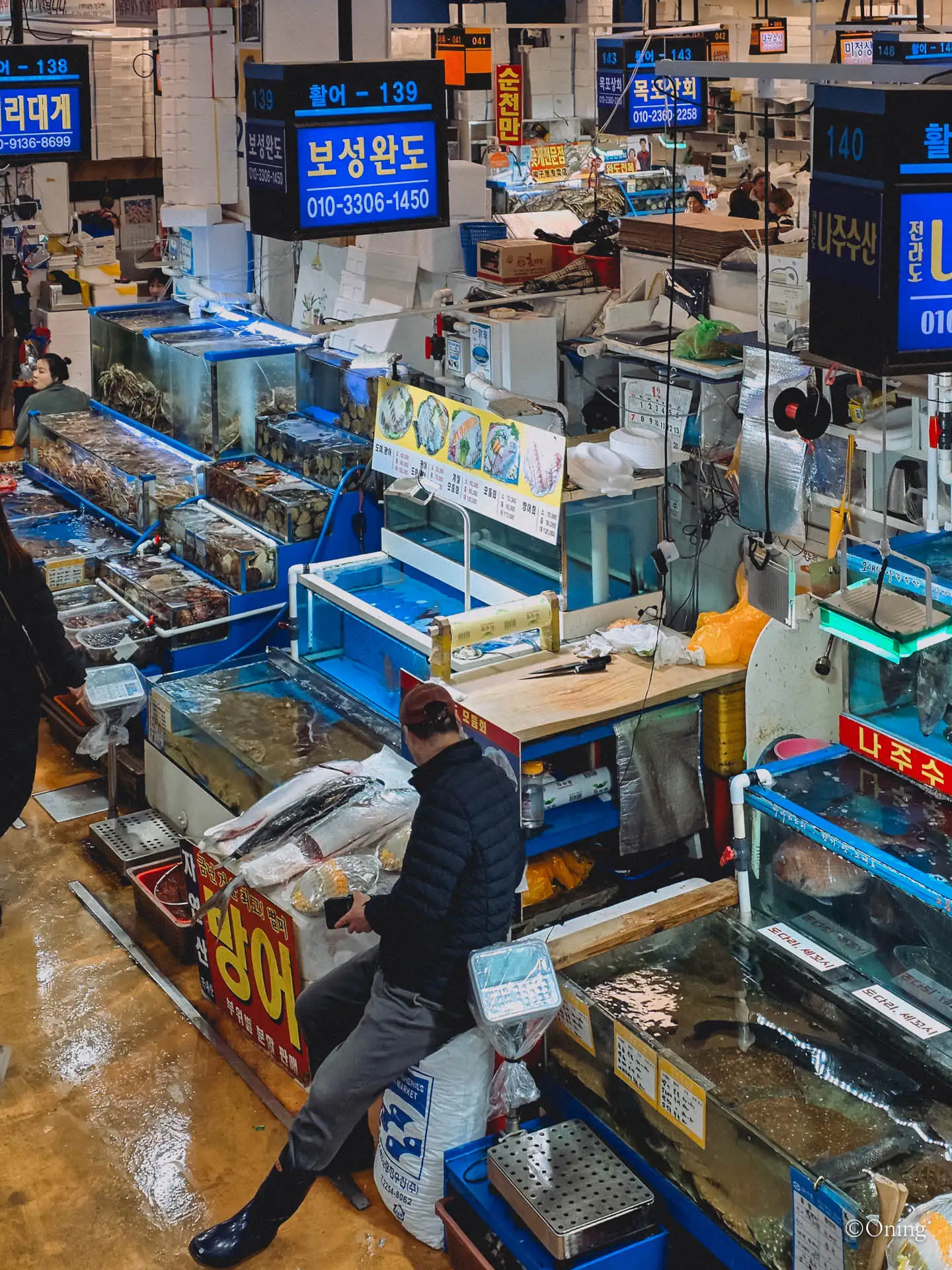
The market’s real advantage is variety. Just wandering around is entertaining — so many fascinating things to see. Beyond hoe, you can pick up shrimp, crab, clams, live octopus, raw oysters, whatever catches your eye. Just know that fish market prices aren’t necessarily cheap, so do your research beforehand.
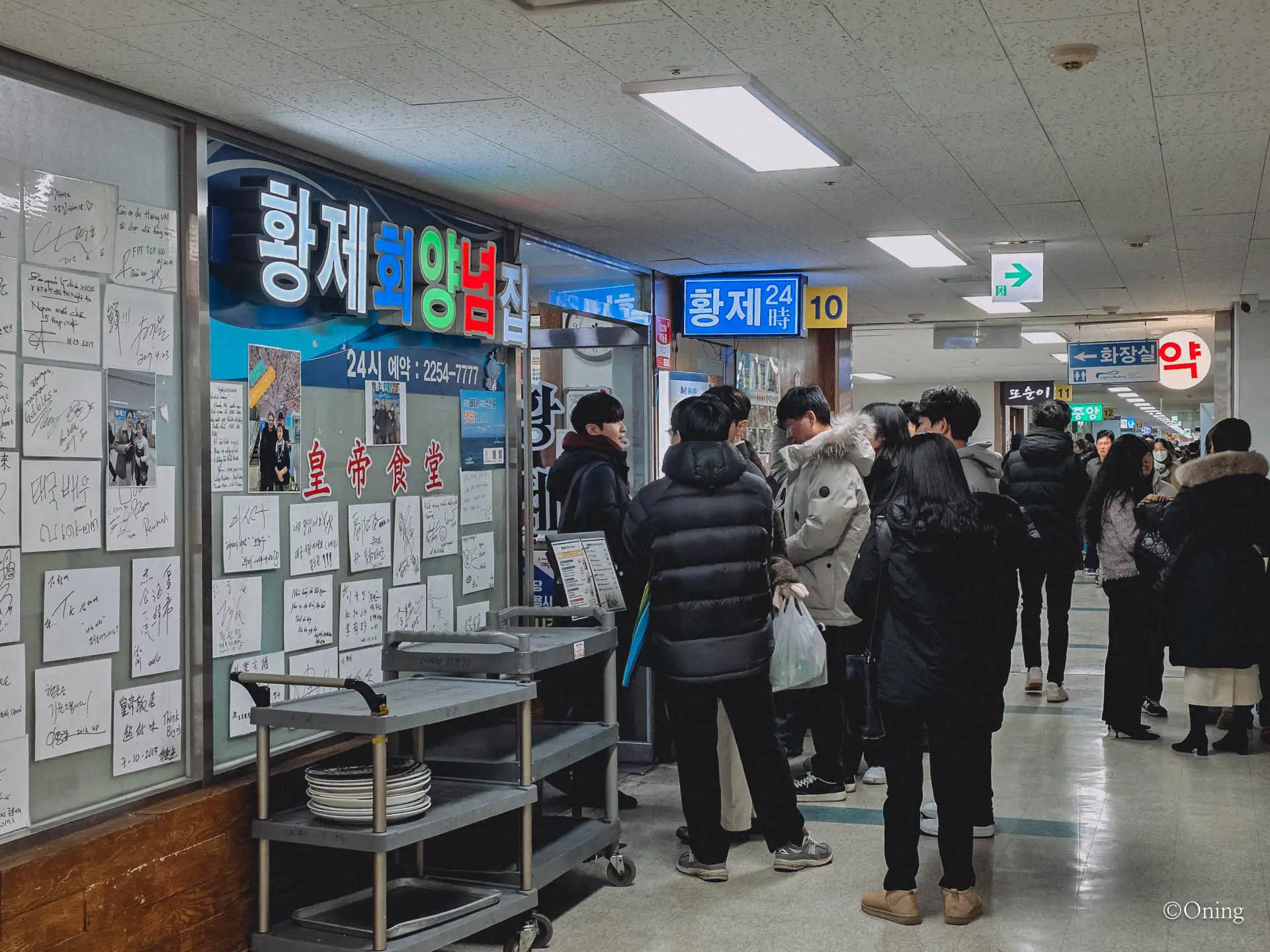
Once you’ve bought your fish, where do you eat it? I always take mine home, but if that’s not an option, head upstairs where restaurants will prepare your purchase. Tell the vendor you’re eating there, and they’ll direct you to a partner restaurant. Or pick one yourself. Hand over your bag of fish, and they’ll slice, cook, or prepare it however you want — hoe, grilled, steamed, stir-fried, soup — for a seating and preparation fee. Think ahead about how you want to enjoy your seafood.
If someone in your group doesn’t eat seafood, Garak Market might be better than Noryangjin. Garak handles both seafood and meat, so restaurants there can accommodate mixed preferences.
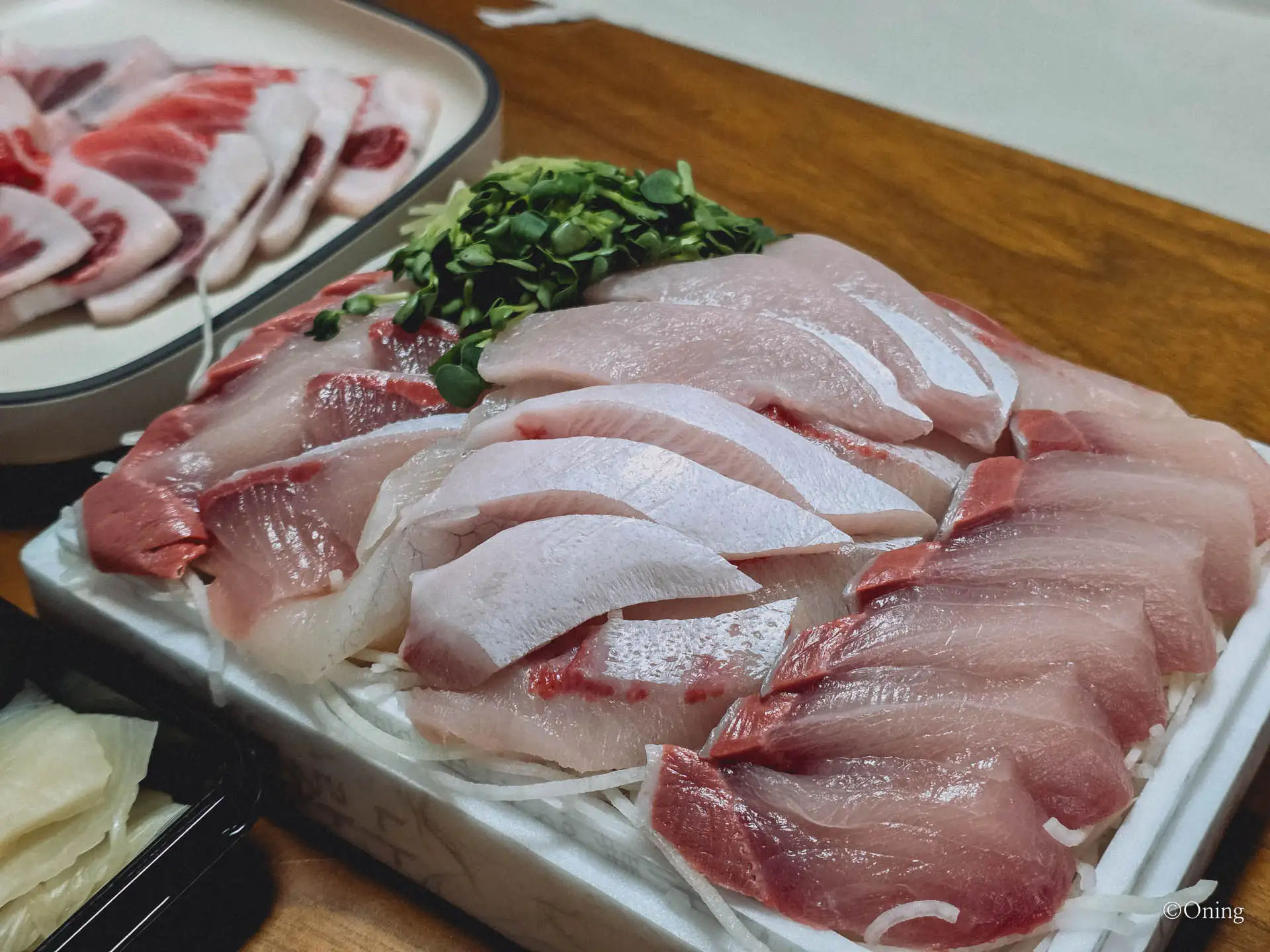
I bought a mini portion of yellowtail hoe (about 1.5 servings, 53,000 won) from Dokdo Susean plus some tuna belly from a second-floor vendor. The mini size meant fewer cuts, but the taste was excellent. Unlike popular restaurants with mandatory waits, the market has no lines, endless options, and plenty to explore — a worthwhile experience for tourists too.
Noryangjin Fish Market List
- Dokdo Susan (stalls 002-004)
- Son Seonjang (stalls 017-019)
- Jeonla Sanghoe (stalls 159-161)
- Hyeongje Sanghoe (stalls 168-172)
- Ilseong Susan (stalls 007-009)
Where to Eat: Korean-style-pubs Serving Seafood
If committing to a full hoe restaurant feels risky — maybe you’re not sure about raw fish, or someone in your group can’t eat seafood — consider a Korean pub or Japanese-style izakaya that serves a variety of dishes.
Being a full-service restaurant, there are fallback options if hoe isn’t working out. The atmosphere is usually nice for lingering, but expect higher prices for smaller portions, and alcohol orders are typically required. Reservations might be necessary given the limited seating.
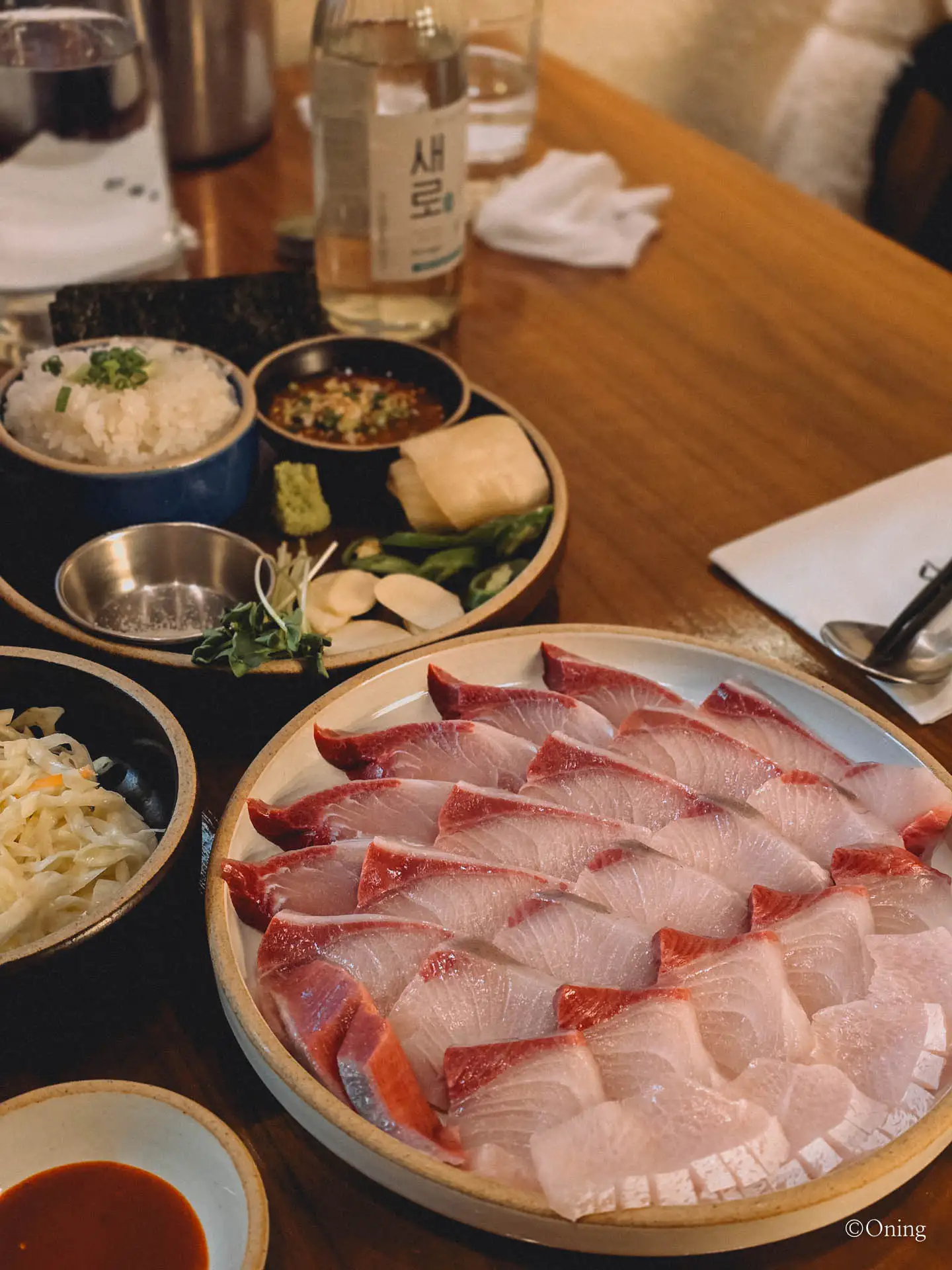
Recently, searching for a bangeo-hoe spot near a friend’s office, I found Sujokgwan — a Korean-style pub. Despite the name meaning “aquarium,” they have more than seafood: flatfish and tuna hoe, abalone, sea squirt, live octopus, triploid oysters, steamed clams, and octopus, alongside Korean meat dishes like bossam (pork wraps) and LA galbi (short ribs). The bangeo-hoe(58,000 won) was excellent and my first of the season. For a foreign friend’s first Korea visit, somewhere like this might be the safer introduction.
Seafood Restaurant List
- Soo jok gwan (Gangnam-gu)
- Baboseom (Yongsan-gu)
- Badadang (Seocho-gu)
Ready to Try Winter Bangeo-Hoe in Korea?
Somehow, bangeo-hoe became my most-eaten dining-out dish this winter. I know that sushi and sashimi abroad often differs from what you get in Japan or Korea, so I can’t push this as a must-try for everyone. But if you’re comfortable with raw fish — that soft, bouncy, chewy texture — then Korea’s winter delicacy, winter yellowtail, deserves a spot on your list.
Klook.com